
The short answer
Kathakali is a classical dance drama with elaborate make up, easy to see in short evening shows in Fort Kochi. Theyyam is a living ritual performed at village shrines in north Kerala, mainly around Kannur and Kasaragod, during a season that runs roughly from November to May.
Kathakali
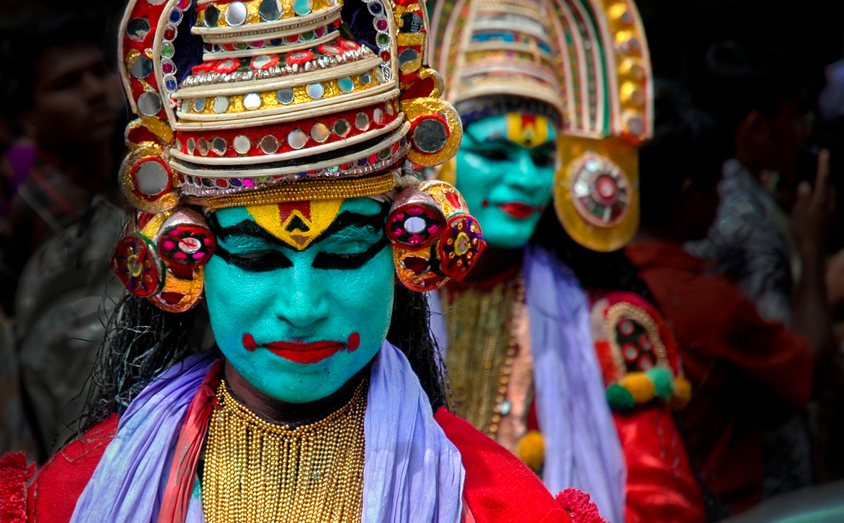
Kathakali tells stories from the Hindu epics through gesture, facial expression and drumming. Full performances once lasted all night. Visitor shows in Fort Kochi are about an hour or two, and you can arrive early to watch the make up.
Kerala Kalamandalam at Cheruthuruthy, near Thrissur, is a famous school for the art and can be visited.
Theyyam
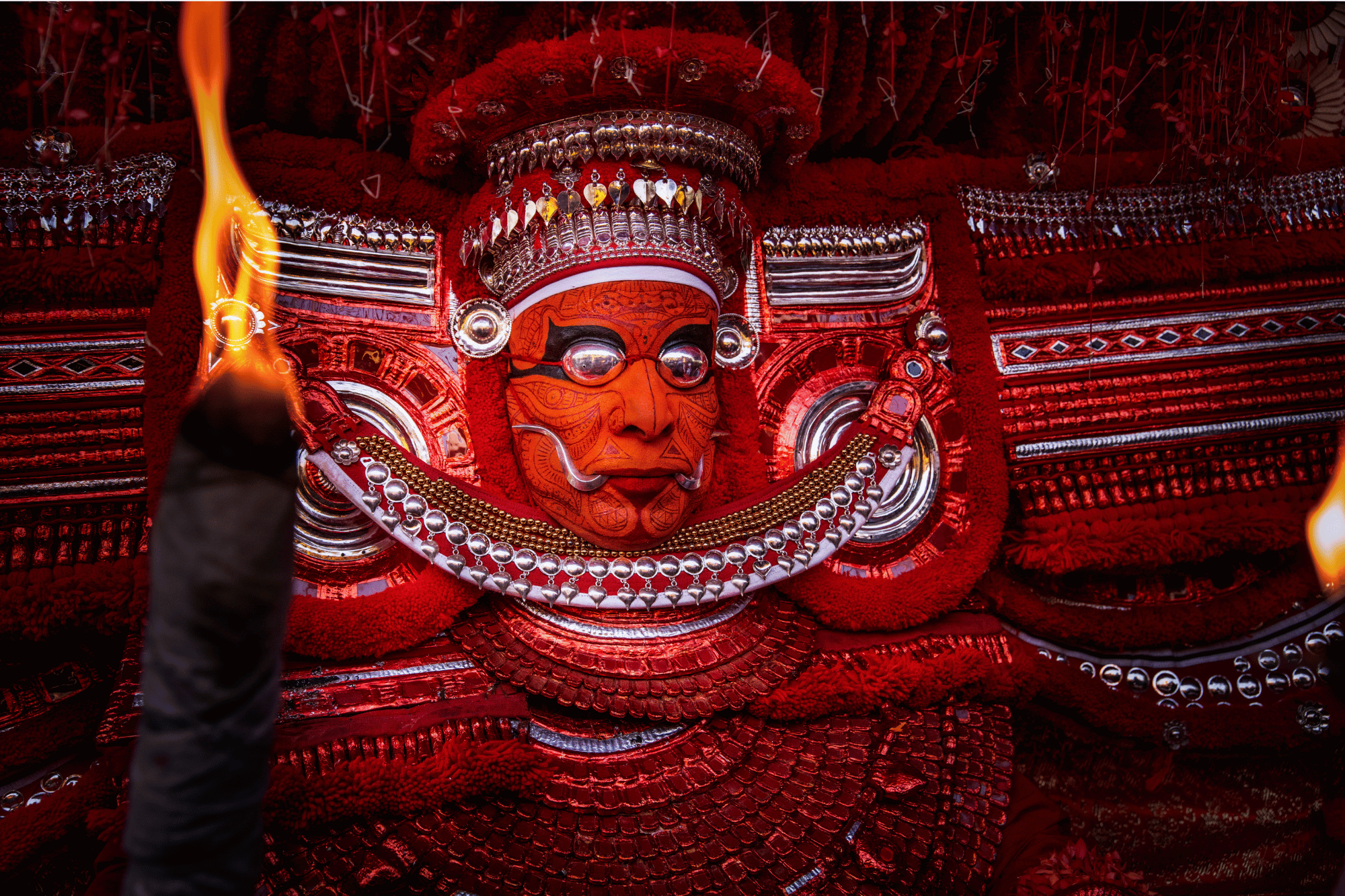
In theyyam, a performer is believed to become a deity for the duration of the ritual. Performances happen at local shrines on dates set by each community, often at night or dawn. It is a religious event, not a show.
Visiting respectfullyGo with a local guide who knows the schedules, dress modestly, ask before photographing and follow the community's lead.
How theyyam and Kathakali differ
| Kathakali | Theyyam | |
|---|---|---|
| What it is | Classical dance drama | Religious ritual |
| Where | Stages across Kerala, Fort Kochi for visitors | Village shrines in north Kerala |
| When | All year | Roughly November to May |
| Length | 1 to 2 hours for visitor shows | Often through the night |
| How to plan | Book a seat on the day or before | Needs local knowledge of schedules |
What to look for at a Kathakali show
The colour of the make up tells you the character. Green faces usually belong to noble heroes, while red and black mark more violent or demonic figures. The actors do not speak. The story is sung by musicians at the side of the stage, and the actors tell it through hand gestures called mudras and very controlled movement of the eyes and face.
Many visitor shows in Fort Kochi begin with a short explanation of the gestures, which helps a great deal. Arrive early if you want to watch the actors apply their make up, which can take a long time and is part of the experience.
How to plan a theyyam trip
Theyyam is the reason most of our clients go to north Kerala. Performances are set by each shrine and family, often with short notice, so there is no fixed timetable you can look up and rely on. A guide from the area, who knows which shrines are holding a ritual that week and which welcome visitors, is the difference between a good trip and a wasted night.
Kannur is the usual base, and the Kannur and Kasaragod coast has quiet beaches and homestays to stay in between performances. Two or three nights gives you a fair chance of seeing more than one ritual. You can fly into Kannur, or come by train or road from Kochi or Kozhikode.
From our Cochin officeTheyyam dates move. We confirm the likely rituals with our contacts in the north close to your travel dates, and we plan the rest of the north Kerala stay around them.
Etiquette at a theyyam
Wear modest clothes, remove shoes where others do and keep back from the performer, who may move quickly and carry fire. Do not use flash, and ask before taking close photographs. Some shrines have rules for women or for non Hindus. Your guide will explain what applies at each place.
Our Kerala expert
Based in Cochin
Our Kerala office has been planning trips from Cochin for 20 years. This guide reflects what we tell travellers who call us.
Ready to plan your Kerala trip?
We can add a performance or a north Kerala theyyam trip.
Frequently asked questions
Fort Kochi has daily evening performances for visitors.
Roughly November to May, in north Kerala.
Yes, respectfully, at shrines that welcome visitors.
Two or three nights around Kannur gives a good chance of seeing a ritual. Dates are set locally, so flexibility helps.
Yes. Temple festivals and cultural centres across Kerala hold performances, and Kerala Kalamandalam near Thrissur is a famous school.